Parents and legal guardians often ask how they can support their student at home in order to strengthen the partnership between the school and your home. Here is a brief FAQ of the most common questions we receive from parents and legal guardians.
What can I do to support my student at school?
Speak to your student’s teacher: They are the number one support for your student at school and can share more detailed information about your child’s academics, social-emotional well-being, and overall wellness at school. Our team is eager to partner with families and meet with parents. However, please schedule a meeting in advance with your child’s teacher as the teachers cannot have individual conversations with parents during instructional time. Please contact our school office or email your student’s teacher directly to schedule a meeting.

Maintaining healthy two-way communication is very important to Sonia Sotomayor Elementary School and the Chula Vista Elementary School District. Parents and legal guardians should expect at least once a week during the school year a weekly newsletter/email from your student’s teacher. In addition, the school team and principal use this school blog as a means to share daily and weekly updates to parents and legal guardians. District social media is also helpful. More information can be found here at our official website: www.cvesd.org
We recommend that you ensure that your student gets regular exercise, a full and consistent night of sleep, and consistent meal times each day full of healthy and nutrient-rich foods, such as fruits and vegetables, as well as high-quality protein. Our district’s wellness policy can be found here: https://www.cvesd.org/parents/wellness
Please also ensure that your student attends school every day, on time. When students miss school, they miss out. Of course, if your student is ill, please contact the school office and keep your child home so that they may return when healthy.
How can I get more involved in my student’s education?
We welcome the support of valued family members. Our school maintains an active parent and school advisory community via our school’s:
- School Site Council (SSC)
- English Learner Advisory Committee (ELAC)
- Parent Teacher Association (PTA)
In addition, our school district provides training and support via these groups:
- District Advisory Council (DAC)
- District English Learner Advisory Committee (DELAC)
- District Budget Advisory Council (BAC)
- Other district-supported trainings – see more information here
We welcome parent involvement and also need to maintain a safe and secure learning environment for our students. Please refer to our most current Family Handbook [coming soon] for policies regarding classroom observations, volunteering at the school, and attending school events, such as field trips. Your support of our school’s policies and procedures strengthens our home-school connection.
Why do schools assign homework?
Research shows that homework has a place in reinforcing study habits and allowing students additional opportunities for practice of essential skills. Reading on a daily basis for at least 20 minutes a day has been proven through scientific research to help a student process and retain information, as well as build language skills. Homework at Sotomayor is intentional and meant to support a student’s educational growth. It is intended to support student thinking.

Generally, elementary students attend school for nearly 6.5 hours a day during the school day (although this varies based on the school day, grade level, and program). In that time, students receive explicit academic instruction aligned to the California State Standards using district and state approved resources. They also receive social-emotional lessons. The intent of all homework is to reinforce and provide extra practice and thinking time for your child. Homework should not interfere with extracurricular activities such as outside sports, hobbies, religious events, and family events. Research also shows the value of children having unstructured time to play and problem solve with peers.
Homework should be meaningful, targeted, and provide additional opportunities to experience success. Students should have the opportunity to read, speak, write, and listen in their homework time. We strongly encourage parents or another valued family member to read with and to your student! Not only does this help develop academic skills and confidence, but it also strengthens relationships between members of your family.
We celebrate and honor student thinking, not compliance. As a public school, we cannot recommend private, outside tutoring organizations, nor are these necessary to complete homework or be prepared for the next grade level. We also do not provide “extra credit” packets for students as worksheets and online programs do not come close to replacing or supplanting the individualized learning that your student receives from qualified staff while in our care. Again, please speak with your student’s teacher with specific questions about homework.
How can I support my student’s social-emotional well-being?
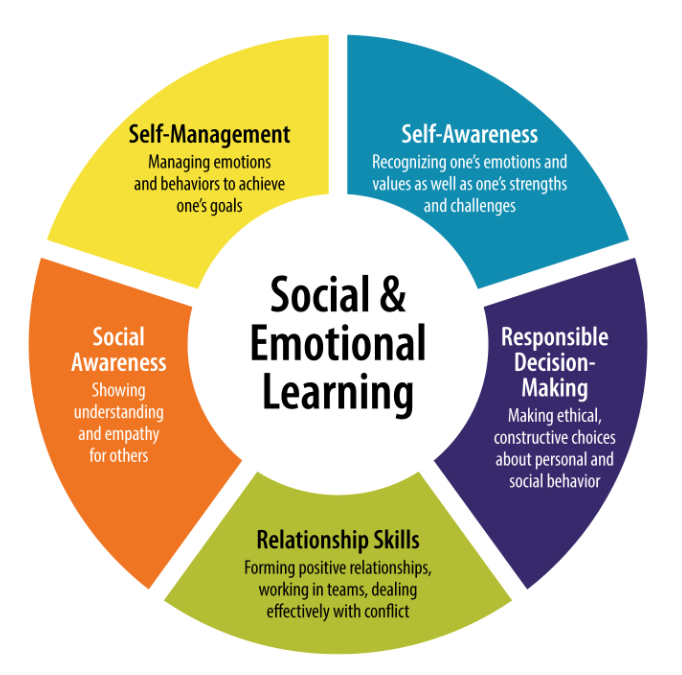
Our school and district uses robust social-emotional learning resources from Harmony, Second Step, and Inner Explorer. It is an expectation at Sonia Sotomayor that teachers and students participate in a minimum of 15 minutes a day for explicit social-emotional lessons. This may include the above curricular resources and/or a community circle time, literature that is based in the diversity of our school community, and mindfulness/breathing/stress reduction activities.
Your student’s teacher can share the particular resources and supports that we use at school in order to build a stronger home-school connection for your student. We would also appreciate the opportunity to learn from parents as well regarding what works with your student.
The intention of the mental health supports and social-emotional learning is to:
- Teach resiliency and develop coping skills for kids.
- Help children identify emotions and apply proactive strategies (such as specific vocabulary, statements to validate feelings, model/practice “I statements”).
- Model and practice coping skills to build independence.
- Recognize positive decision making.
- Improve wellness overall through physical exercise (to decrease anger, depression, anxiety, etc…).
- Support routines and structures such as a consistent sleeping schedule, designated area and time for homework completion, creating reasonable academic and behavioral expectations.
I don’t speak Spanish, but my student is enrolled in the Spanish Language Dual Immersion program. How do I help them?
The Spanish Language Dual Immersion program is designed to immerse students in the language and teachers are trained to use approaches to teach second language acquisition such as visuals, explicit vocabulary, chants, repetition, Total Physical Response, and other strategies to provide comprehensible input to students at any level of their language learning.
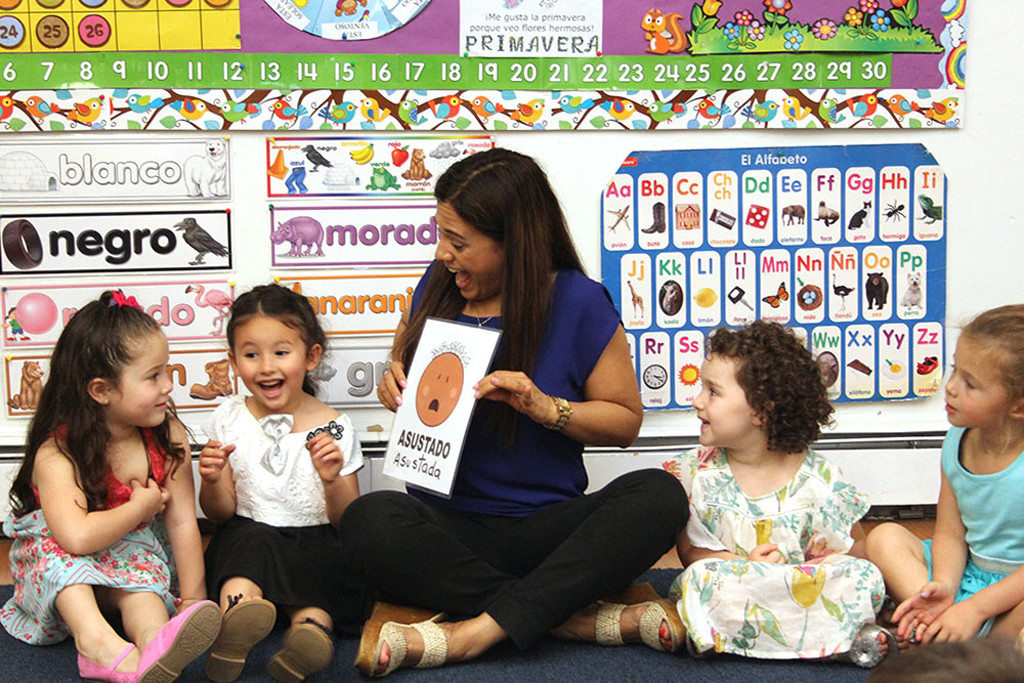
Supporting literacy in any language, is extremely helpful. Reading every night, having a quiet space to do homework, communicating often with your student’s teacher, and learning the partner language along with your student can go a long way. Additionally, providing ways to connect with other families who speak the partner language, having play dates, and even watching movies and listening to songs in the partner language can promote language learning.
My child has an IEP. What are my procedural safeguards?
We are eager to partner with parents and legal guardians to help support your rights and share information with you.
Please see this link: https://www.dgs.ca.gov/OAH/Case-Types/Special-Education/Resources/Page-Content/Special-Education-Resources-List-Folder/Resource-Page

If you have specific questions about your child’s academics or behaviors, please see your child’s teacher and/or IEP case manager. You may also make an appointment with our school psychologist or principal by contacting the school’s main office to discuss specific supports and services.
I am worried my child might be experiencing bullying. What should I do?
Kindness counts! Are you wondering how to support you child if they experience a problem with another student?
We suggest using “I feel…” statements, moving away from others, and seeking help from an adult nearby. Our staff prides itself in actively monitoring students at all times while simultaneously allowing students the time and practice to navigate social situations.
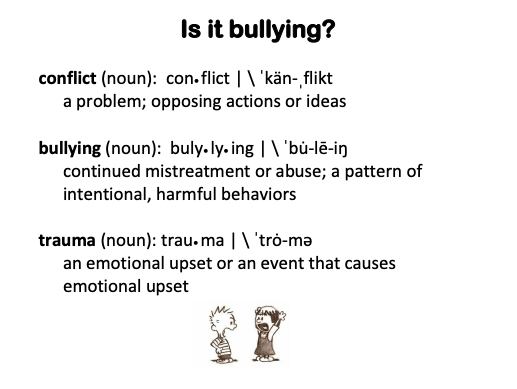
We want our students to become healthy and independent, social adults when they grow up. What our staff has noticed is that students are still learning how to interact with one another and having some problems or conflict. This is not bullying. It may be due to trauma and other sudden social-emotional issues with a student.
Students must learn how to use their words to solve conflict. This is an essential skill for healthy human beings. Healthy human beings set and respect boundaries with others.
If you have a concern about another student’s behaviors impacting your student, we suggest that you first contact your student’s teacher.
How do I keep my student safe using technology?
We recommend that all parents and legal guardians monitor their student’s activity on cell phones, online games, and computers. Online safety includes any computers, cell phone, gaming consoles, e-readers, tablets, electronic watches, and other devices. It is important to discuss with ALL STUDENTS (even at an early age) the following topics:
- Netiquette
- Looking at inappropriate content
- Pop-ups/Passwords
- Not trusting everyone and everything you see online
In addition, older students (tweens and teens) need to hear from trusted adults on:
- Cyberbullying
- Sexting
- Posting personal/inappropriate information (such as pornography, violence, hate speech, and illegal activities)
- Meeting offline with others
Parents occasionally express that they believe their student is too young for these topics. However, research and law enforcement recommendations reinforce that students must have the age-appropriate language to discuss potentially dangerous situations to stay out of harm’s way. We recommend that parents stay calm and level-headed when speaking to students about these topics. Often well-intentioned parents threaten to take away items and punish students when they are found exploring online and that just creates other problems that could be potentially more serious down the line.
Ask your student if they are aware of conflicts between students via social media, online gaming, and other apps. Build trust and answer questions they have in an age-appropriate way. Consult with your student’s teacher, principal, or law enforcement.
Parents should be aware that their student may have access to online content without their knowledge while visiting a friend’s house or at the park. Therefore, having conversations in a proactive way ensures that students can confide in their parents (or other trusted adults) and share information with them.
Online safety continues to be a hot topic in our community! We encourage parents to check out additional resources for online safety at https://www.missingkids.org/netsmartz/videos#elementary.
Other helpful resources are Common Sense Media and Internet Matters. Those links are below…
Per the Sonia Sotomayor Family Handbook, students are not permitted to use cell phones, Apple Watches, or other personal communication devices on school or district property. This includes the use of these devices on a field trip under the supervision of district employees and on school buses to and from school or district-sponsored trips. This increases student safety on our campus and for the safety of all students.

As always, do not hesitate to contact your child’s teacher or our school office with specific questions about your child’s overall progress and well-being.

 Sonia Sotomayor Elementary School